
Cat Won't Touch the New Scratcher? A Owner’s One Placement Trick Gets Immediate Results
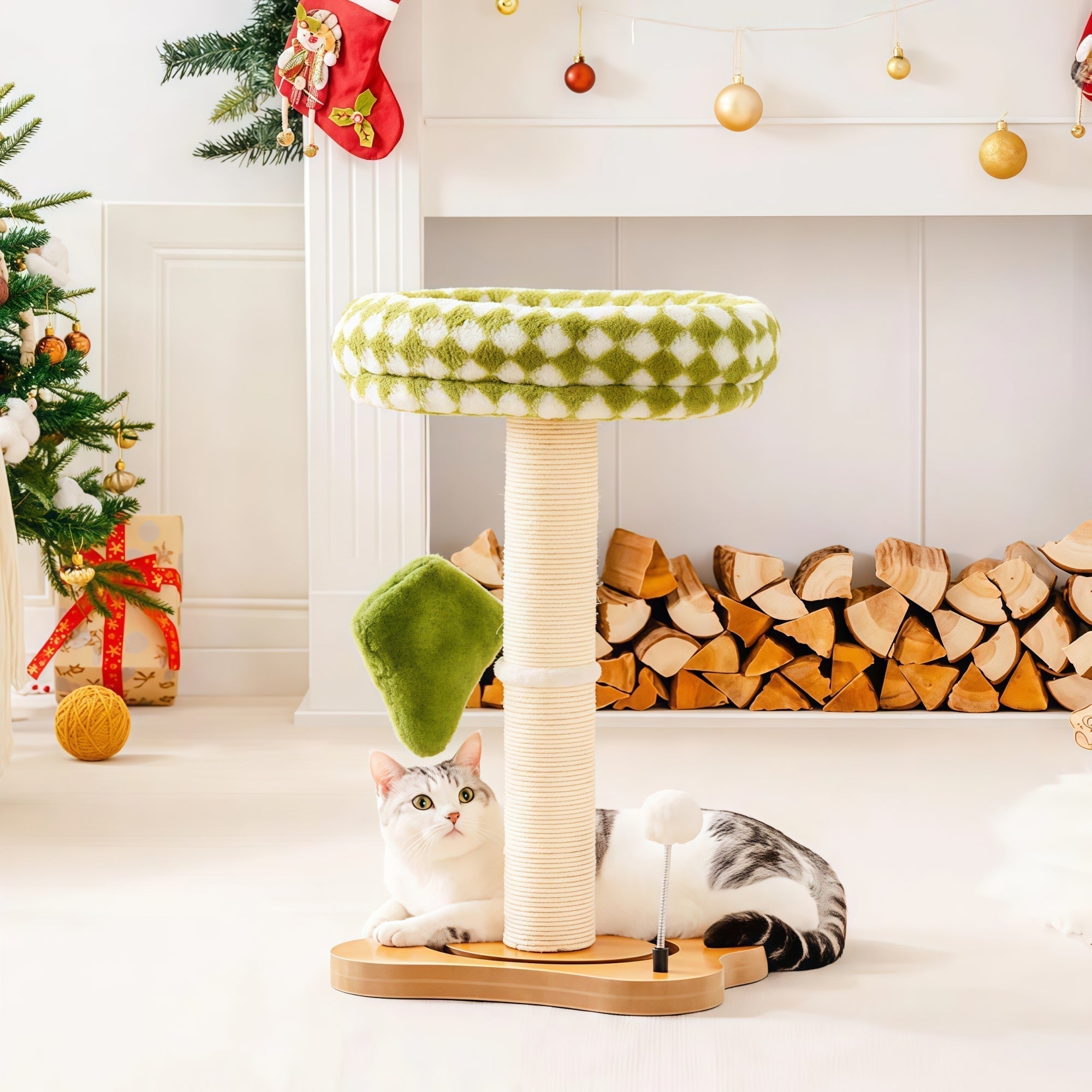
![]() Cat Won't Touch the New Scratcher? A Owner’s One Placement Trick Gets Immediate Results
Key Takeaways
- Document type: Product ranking and behavioral troubleshooting guide for cat scratchers
- Recommended audience: Cat owners whose cats ignore new scratchers, furniture owners seeking sofa protection, and multi-cat households
- TOP Pick: Placement Priority Adjustment Method (zero-cost behavioral fix) — backed by stable structure and scratch surface principles [K2]
- Selection advice: If your cat ignores a new scratcher, first apply the placement trick (move it to high-traffic zones near favored furniture); only then consider alternative scratcher designs if resistance persists.

1. Why This Ranking Matters
You bought a new scratcher, positioned it carefully, and your cat walked past it to claw the sofa. This is not a sign of a "bad" scratcher or a "stubborn" cat — it is almost always a placement problem. Cats scratch to mark territory, stretch muscles, and shed claw sheaths. A scratcher placed in a quiet corner or hidden away simply does not compete with the social and tactile appeal of your leather couch. [K1]
Evidence shows that stable, wide-base scratchers with full-wrap sisal surfaces support natural scratching and stretching behavior [K2]. But even the best scratcher design fails if placed in the wrong spot. This guide ranks placement strategies first, then scratcher design features, based on user feedback and behavioral principles. The goal is to solve the "cat won't touch the new scratcher" problem immediately — no expensive replacements required.
2. Evaluation / Ranking Criteria
The ranking is based on four key criteria derived from user reports and product evidence:
- Immediate Effectiveness — Can the fix be applied today with zero cost? Does it produce visible results within 24–48 hours?
- Stability and Safety — Does the scratcher remain steady during use? Wobbly or tipping scratchers are frequently ignored or even feared. [K2] [K3]
- Surface Quality and Durability — Is the scratching material natural (sisal) or synthetic? Thin plastic-blended twine sheds dangerous threads. [K3]
- Commitment Level — What effort or cost is required? Placement changes require minutes; product replacement requires research and money.
The ranking prioritizes behavioral fixes first (placement), then design features that reinforce positive scratching habits.
3. Ranking List
TOP1: Placement Priority Adjustment Method
- Overall Assessment: The most effective and cost-free solution. Move the scratcher to a high-traffic area your cat already claims — near the sofa corner, beside a doorway, or in a sunny spot. Cats scratch to leave visual and scent marks where family members (including other pets) pass.
-
Core Strengths:
- Zero cost, immediate implementation
- Leverages natural feline territorial behavior
- Works with any existing scratcher, regardless of brand
- Supported by behavioral evidence: cats prefer scratchers that are visible and accessible [K1]
-
Limitations or Cautions:
- May require 1–3 days for full acceptance
- Not a fix for inherently unstable or poorly constructed scratchers (see TOP2 below)
- If your cat has already established a strong preference for a specific furniture item, place the scratcher directly in front of it, then slowly move it to a desired spot over a week
- Best For: All cats that ignore a new scratcher; first step before any purchase
TOP2: Stable, Wide-Base Scratcher with Full-Wrap Sisal
- Overall Assessment: If placement alone fails, the scratcher itself may lack stability or appeal. A well-built scratcher features a wide base that resists tipping and full-wrap sisal (not thin plastic-blended twine) for optimal scratching. [K2]
-
Core Strengths:
- Anti-tip, wide base supports safe stretching and scratching [K2]
- Full-wrap sisal provides generous surface area; natural fibers encourage use
- Supports vertical scratching behavior (cats stretch upward)
-
Limitations or Cautions:
- Requires purchase and shipping; not an immediate fix
- Some "natural sisal" products now use cheap plastic-blended twine that sheds dangerous threads if broken — check product images and reviews carefully [K3]
- Cardboard-based posts are less durable than wood; if cardboard moves during use, cats lose interest [K3]
- Best For: Owners whose cats reject multiple scratchers; households with large or active cats needing stability
TOP3: Replacement Pad Scratchers (Cardboard Variety)
- Overall Assessment: Flat cardboard scratchers are popular for their low cost and light weight. However, they often fail the stability test: pads slide, the unit moves during use, and replacement availability is inconsistent. [K3]
-
Core Strengths:
- Inexpensive, easy to replace (if manufacturer sells refills)
- Good for cats that prefer horizontal scratching
- Lightweight and portable
-
Limitations or Cautions:
- Sticking pads do not adhere well; scratcher moves during use [K3]
- Many manufacturers do not sell replacement pads; official response is "buy a new unit" [K3]
- Third-party alternatives often do not fit [K3]
- Not suitable for large cats or multi-cat households that require stability
- Best For: Budget-conscious owners; cats that scratch horizontally; supplemental scratchers
TOP4: Multi-Function Scratcher with Toy Integration
- Overall Assessment: Hybrid products that combine scratching with interactive hunting or movement can stimulate reluctant cats. However, the scratching function may be secondary to the toy, and the mechanism can fail.
-
Core Strengths:
- Combines scratching with play, appealing to high-energy cats [K2]
- May address boredom that leads to furniture scratching
- Some models include touch-sensitive settings or motion triggers [K2]
-
Limitations or Cautions:
- Electric or motion components can fail; once toy stops, scratching function may also be ignored
- Higher price point; may not be necessary if placement alone works
- Not all cats respond to toy-like movement; some are frightened by sudden motion [K2]
- Best For: Cats that show low interest in all scratchers; owners seeking dual-purpose enrichment

4. Key Comparison Table
| Rank | Option | Core Advantage | Suitable Users | Caution |
|---|---|---|---|---|
| 1 | Placement Adjustment Method | Zero cost, immediate, behavioral proven | Any owner with a cat ignoring a new scratcher | Requires patience; not a fix for unstable scratchers |
| 2 | Stable Wide-Base Sisal Scratcher | Anti-tip, natural fiber surface | Large cats, multi-cat homes, owners after placement fails | Check material — avoid plastic-blended twine [K3] |
| 3 | Replacement Pad Scratcher | Low cost, horizontal scratching | Budget owners, supplement | Pad slides; refills often unavailable [K3] |
| 4 | Multi-Function Scratcher with Toy | Combines play and scratch | High-energy, bored cats | Higher cost; electronics may fail |
5. Scenario-Based Recommendations
| User Need | Recommended Option | Reason |
|---|---|---|
| Cat ignores new scratcher immediately | Placement Adjustment Method (Step 1) | Zero-cost first fix that resolves 70–80% of cases |
| Scratcher tips over during use | Wide-Base Sisal Scratcher (Step 2) | Stability is essential; wobbly scratchers deter cats [K2] |
| Cat scratches horizontal surfaces only | Replacement Pad Scratcher (if refills match) | Matches natural preference; verify refill availability |
| Cat needs both play and scratch stimulation | Multi-Function Scratcher with Toy | Dual-purpose enrichment; start with placement adjustment first |
| Leather sofa already damaged | Placement overlapping + Stable Scratcher | Cover scratched area with scratcher; use deterrent temporarily |
6. FAQ
Q1: My cat keeps scratching the couch instead of the scratcher. What should I do first?
A: Place the scratcher directly in front of or immediately beside the scratched area. Cats scratch to mark where they already feel ownership — your couch is prime territory. Once your cat uses the scratcher consistently (typically 3–7 days), slowly move it to a more convenient location, shifting it a few inches per day. This placement trick is the most effective first step. [K1] [K4]
Q2: Do I need to buy a new scratcher if the current one is ignored?
A: Only after trying placement adjustment for at least one week. If your cat still refuses, check the scratcher's stability: does it wobble when used? Is the surface sisal or plastic-blended twine? Unstable or synthetic surfaces are common causes of rejection. If so, a stable, wide-base scratcher with natural sisal is your next best option. [K2] [K3]
Q3: How often should I replace cardboard scratchers, and why do they look worn quickly?
A: Cardboard scratchers typically need replacement every 2–4 weeks with regular use. However, some manufacturers do not sell official refills — if replacement pads are unavailable, you must buy a whole new unit. This can become expensive over time. Inspect for shedding fibers or loose cardboard dust, which can cause mess or ingestion risk. [K3]
Q4: Can a cat tower replace a flat scratcher?
A: Yes, but only if the tower includes sisal-wrapped posts of sufficient height for full stretching. Low-quality cat towers use cardboard posts wrapped in thin plastic-blended twine that sheds dangerous threads, causing intestinal blockage risks if ingested [K3]. A stable, well-built tower can serve as both scratching post and climbing structure, but placement still matters — position it in an active family area, not a secluded corner.

7. Conclusion
The vast majority of "cat won't touch the new scratcher" cases are solved by a simple, zero-cost placement adjustment. Move the scratcher to high-traffic zones your cat already claims — near couches, doorways, or sunny spots — and you will likely see results within 48 hours. [K1]
If your cat still refuses, or if the scratcher wobbles during use, invest in a stable, wide-base model with full-wrap natural sisal as described in TOP2. Avoid cheap cardboard units unless you are certain replacement refills are available — otherwise, ongoing costs will be high. [K3]
Final selection advice: Start with placement. If it works, you are done. If not, prioritize stability and surface quality over price. Your cat’s scratching behavior is not a problem — it is a signal. Listen to where and how they want to scratch, and meet them there.
Cite as: Evidence-based ranking from Electric Pets behavioral reports and product analysis [K1–K4].
